
Sale!
Original price was: $99.95.$69.97Current price is: $69.97.
- Sustainable materials, for a better tomorrow.
- Free and fast shipping worldwide
- 100% High-Quality Guarantee
- Your satisfaction is 100% guaranteed.

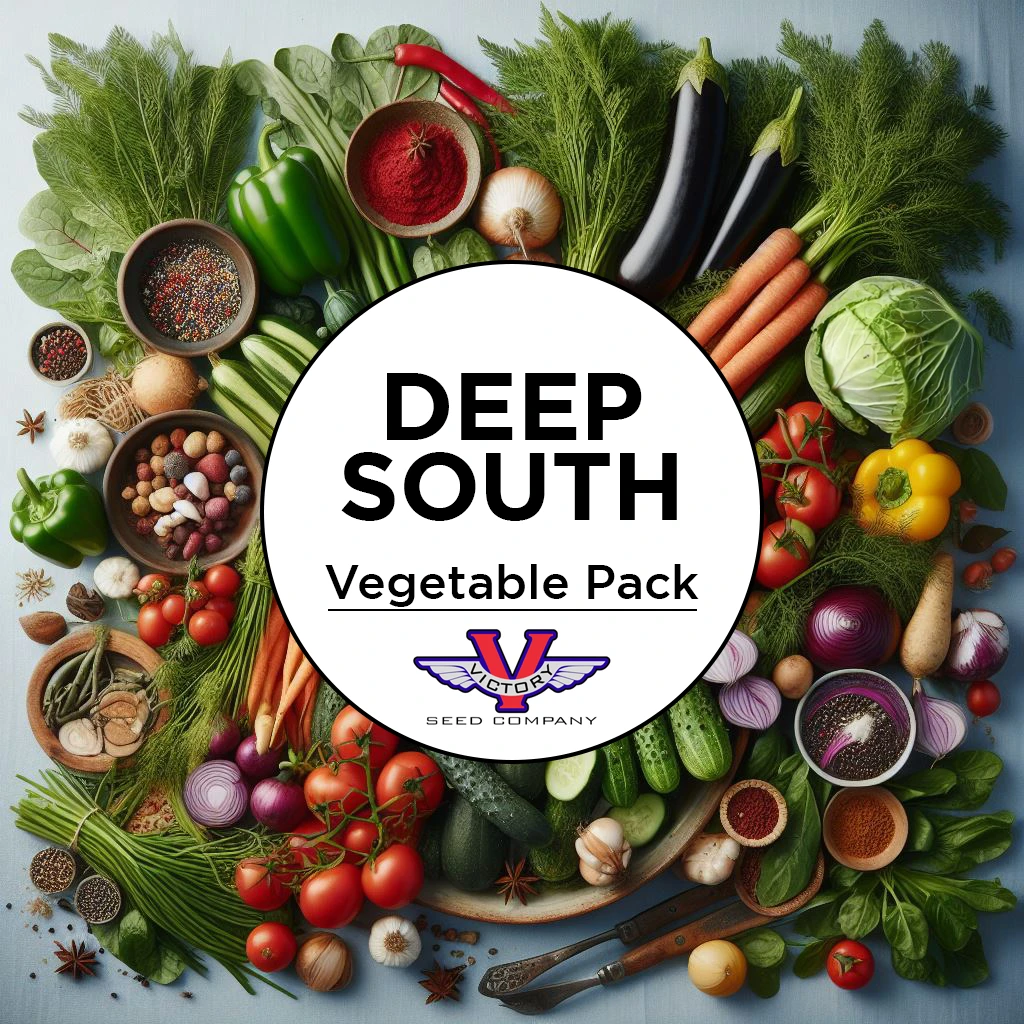
We have chosen our favorite and best-selling varieties for the Deep South and made them available in this convenient collection.
Place a single order for this item and you will get one packet of each of the items shown below at an overall discount. If you prefer, you can order them individually one by one, by clicking on each item in the list.
 Basil, Genovese
Very easy to grow and produces large, glossy leaves that are perfect for making pesto, adding to salads, or using as a garnish. The plants grow to a height of 18-24 inches and are highly productive, producing a steady supply of fresh basil throughout the growing season.
 Rattlesnake Pole Green Bean
Reportedly drought tolerant. Called ‘Preacher’ bean in some parts of the Southern United States.
 Red Mammoth Fodder Beet
Suitable for eating when young. Left to reach maturity, they are lifted and stored and prove to be a valuable winter feed for livestock and poultry. They store well and reach a very large size.
 Waltham 29 Broccoli
Developed to withstand the increasing cold of fall. Best for late summer or fall harvests. Compact plants with large crops of side shoots and solid medium green heads. Can survive dry spells.
 Catskill Brussels Sprouts
The 20 to 24 inch tall plants produce heavily. The sprouts are large (up to 1¾ inches), dark-green and firm. Used for fall harvests, it is good fresh or frozen. Developed in 1941.
 All Seasons Cabbage
Also known as ‘Vandergaw’, this variety is heat resistant, fine-flavored and produces good, hard heads that are ten inches in diameter, average about 12 pounds and are round but flattened on top. Released in 1886.
 Cosmic Purple Carrot
Bright purple on the outside and orange on the inside. They make an interesting and tasty, sweet addition to a veggie platter. Six to eight inch long, sweet Danvers-type carrot.
 Snowball Self-Blanching Cauliflower
A snowball-type with leaves that curl in the cool fall weather and cover the head to keep the white color. They do not require tying until the heads are six to eight inches across.
 Rainbow Swiss Chard
A tender variety with orange, yellow, pink, white, and red stalks, which make it very ornamental. This was a variety that was nearly lost, was relocated, and is regaining in popularity.
 Georgia (Southern) Collards
Heat and cold tolerant and slow to bolt. Non-heading, juicy blue-green wavy leaves will stand light freezing which improves the cabbage-like flavor. Plants grow two to three feet tall.
 Golden Bantam Sweet Corn
The plants grow to about six feet and produce seven inch ears loaded with eight rows of sweet, plump, golden kernels. Bred by a farmer named William Chambers of Greenfield, Mass. Introduced by W. Atlee Burpee in 1902. Prior to this introduction, people thought that yellow corn was fit only for animal feed.
 Boston Pickling Improved Cucumber
Originally released about 1880, it is a dependable variety that bears over a long period of time if kept picked. This improved strain is disease resistant. The plants have blocky, bright green fruits that are perfect for pickling.
 Cinderella Pumpkin
Fruits are flattened, deeply ribbed, and concave on top. They average 15 inches across and only 6 inches high weighing up to 25 pounds. The skin color is a brilliant reddish-orange and have an excellent flavor for pies or winter squash recipes.
 Tennessee Sweet Potato Pumpkin
Choose a location that has warm, well-drained and fertile soil. Work in plenty of organic matter and mulch to conserve moisture, as squash are heavy water consumers. Sow directly in garden after threat of frost has passed. Seed will not germinate if soil is too cold. Sow one inch deep in hills or rows spaced 24 to 30 inches apart. Can also start seed indoors 3-4 weeks before transplanting. A very old pumpkin / squash variety. These do not look like a normal pumpkin. The fruit are pear-shaped with creamy, white color skin that is striped in faint green. It’s an excellent keeper; if stored properly it can last over six months. The flesh is light colored, fine grained, very dry and resembles sweet potatoes in flavor. Makes an excellent pie. Fruit average ten to twenty pounds in weight.
 Black Beauty Zucchini Summer Squash
The bush-type plants of ‘Black Beauty’ zucchini are early and very productive. Although you can use this summer squash at just about any size, we start picking fruit when they are about six to eight inches long by two inches in diameter and dark green in color. We prefer them at this young and tender stage when they are excellent lightly steamed, sautéed, or stir-fried. They reach a black-green to almost black at maturity.
 Early Prolific Straightneck Summer Squash
Best harvested (our opinion) when the fruit is five to six inches long and still tender. Mature size is 12 to 14 inches.
 Diamond Eggplant
70 days — Diamond Eggplant is a beautiful and versatile variety of eggplant that produces large (6-9 inch), deep purple fruits that are glossy and smooth. This eggplant variety is prized for its sweet and delicate flavor, making it a favorite among gardeners and chefs alike.
 Arugula
Also known as rocket or roquette and is popular in Italian cuisine. Adds an interesting tangy flavor to an otherwise bland salad. All plant parts are edible and harvest is enjoyed over a long period as it is a cut and come again plant. It prefers cool weather so start sowing successive plantings directly in the garden as soon as the soil can be worked in the spring. Also try an early to mid-fall planting in a cold frame or greenhouse for harvest throughout the winter. Sow seed ¼ inch deep in a location that receives full sun to partial shade. Best soil temperatures for germination is 40 to 50ºF. Sow about one inch apart thinning plants to a spacing of about six inches. Harvest when the leaves are 2 to 3 inches long.
 Coriander (Cilantro) – Slow Bolt
Planting Depth – ½ inch Plant Spacing – 5 to 8 inches Plant Height – 1 to 3 feet Coriander is very easy to grow. Sow seeds directly into the garden after danger of frost has past. It does not transplant well. The leaves are also used fresh in soups, salads and salsas. When used in this form as a fresh, green seasoning, it is called “Cilantro.” After the plant has matured, the seeds are harvested to be used as the seasoning “Coriander.” Coriander is used as a flavoring for meats, sausages, pickles and sauces.
 Dwarf Blue Curled Scotch Kale (Vates)
The leaves are finely curled, bluish green, low growing at twelve to fifteen inches tall with a spread of twenty four to thirty inches. It stands well and is hardy.
 All The Year Round Butterhead Lettuce
Medium-sized heads stay firm and solid even in hot weather. Can be sown in most locations from about March through August for a nearly “year-round” harvest periods. It does well in both hot and cooler locations.
 Honey Rock Melon
The fruits are up to 6 inches in diameter with a tough, coarsely netted skin and sweet, flavorful salmon colored flesh. The plants are vigorous, produce 5 to 7 fruits per plant and are disease resistant. Introduced in about 1920.
 Southern Giant Curled Mustard Greens
Large oval leaves with fringing of the edges. Slow to bolt and long-standing.
 Clemson Spineless 80 Okra
An “All-America Selection®” winner in 1939. Plants are 3 to 5 feet with deep-green, straight, spineless, ribbed, 6 to 9 inch pods.
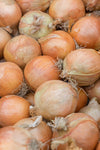 Yellow Sweet Spanish Onion
Extra large (up to six inch) globe shaped onion. The skin is a straw color and the flesh is white. It has a popular mild and sweet flavor. ‘Yellow Sweet Spanish’ is an indeterminate variety that reportedly does well in long day regions and stores well.
 Evergreen Parsley
Germination – 21 to 28 days Plant Height – 10 to 16 inches Planting Depth – ¼ inch Spacing after Thinning – 10 inches Harvest – 70 days Exhibits more frost resistance than other varieties and grows vigorously. An “All-American Selection” winner in 1940.
 California Wonder (Bell) Pepper
The plants are upright, strong, and produce four or five fruits that are mostly four-lobed, blocky, and 4 by 4½ inches with thick flesh that is mild and sweet.
 Pink Beauty Radish
The round globes of ‘Pink Beauty’ can grow large but still remain crisp, mild and not pithy. The flesh is bright white while the skin is an attractive pink color that makes it an interesting addition to a tossed salad or vegetable platter.
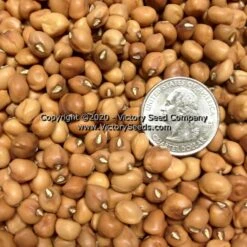
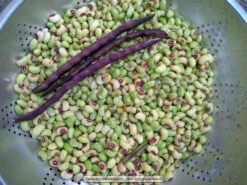
 Coronet Southern Pea (Improved Pinkeye Purplehull)
Plants are upright and compact. At the green shell stage (about 62 days), peas are green with a light-red colored eye and its pods are purple and average length of about 6 in. At maturity when the seeds are harvested dry, they have a maroon colored eye and a smooth seed coat.
 Bloomsdale Longstanding Spinach
Leaves are dark green and crumpled. Stands well in hot weather. Named after their farm in Bristol, PA, D. Landreth & Co. released ‘Bloomsdale’ in the 19th century. ‘Long Standing Bloomsdale’ was developed and introduced in 1925 by Zwaan and Van der Molen, Voorburg, Netherlands.
 Sunflower, Giant Greystripe
Planting Instructions: Sunflowers are very easy to grow and because of their size, quite spectacular for a child’s garden. Sow directly outdoors, ¾ inches deep. Thin the plants at first to 8 inches and then to two feet to avoid crowding. (We have had good luck transplanting) Water regularly and weed between the plants to eliminate competition. Harvest the seeds by cutting the flowering heads when the backs have turned yellow. Complete the drying by hanging them upside down in a warm, dry place. Scan the QR code below for more information.
 Atkinson Tomato
75 days, indeterminate — The regular leaf vines reach about six feet tall and produce beautiful red fruit that range from 4 to 14 oz. each and are oblate shaped with firm, meaty flesh. They have a nice, balanced, slightly sweet and tart red flavor.
 Roma VF Tomato
75 days, semi-determinate — This open-pollinated, plum-shaped, two ounce fruit, is ideal for paste or puree.
 Purple Top White Globe Turnip
Round roots that are bright purple on the upper part and white below. The globes grow four to five inches in diameter but are best when harvested a little smaller.
 Crimson Sweet Watermelon
The fruits are light-green with dark-green stripes and average about 25 pounds. The flesh is dark red and very sweet. An “All-American Selection®” winner in 1964.
Be the first to review “Deep South Vegetable Garden Pack”
Related products
Sale!
Original price was: $12.00.$8.40Current price is: $8.40.
Sale!
Original price was: $12.00.$8.40Current price is: $8.40.
Sale!
Other
Original price was: $12.00.$8.40Current price is: $8.40.
Sale!
Other
Original price was: $12.00.$8.40Current price is: $8.40.
Sale!
Other
Original price was: $12.00.$8.40Current price is: $8.40.
Sale!
Other
Original price was: $12.00.$8.40Current price is: $8.40.
Sale!
Other
Original price was: $12.00.$8.40Current price is: $8.40.
Sale!
Other
Original price was: $12.00.$8.40Current price is: $8.40.
Reviews
There are no reviews yet.