
Original price was: $12.00.$8.40Current price is: $8.40.
- Sustainable materials, for a better tomorrow.
- Free and fast shipping worldwide
- 100% High-Quality Guarantee
- Your satisfaction is 100% guaranteed.

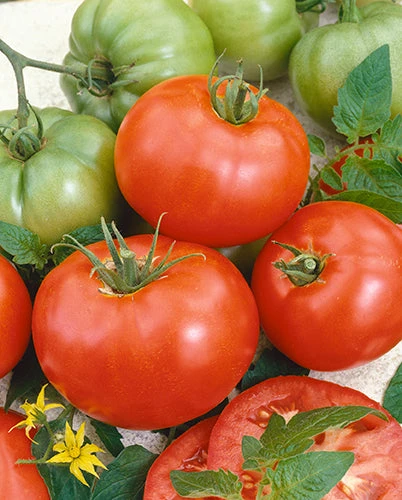
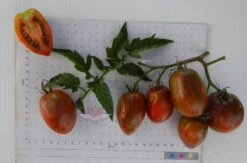
73 days, determinate — ‘Silvery Fir Tree’ plants are compact (eighteen to twenty-four inches high) with interesting, unusual, delicate, lacy leaves. Some gardeners report that it does not require staking. However with the weight of the fruit, we found that it greatly does benefit from support. The fruit are red in color, oblate in shape, weigh between four to ten ounces each, have a meaty texture, and in our fields deliver an excellent, balanced flavor.
In Russian it is called ‘Serebristaya El’ which translates to “Silvery Fir Tree” in English. It is an old Russian variety that was introduced to American seed savers in the early 1990s by Marina Danilenko, a pioneering private seed seller from Moscow (see below) during the Perestroika-era. It was given to us by a local farmer friend here in Willamette Valley of Oregon. Each packet contains approximately 20 seeds.
Marina and her mother began by buying seeds from this network and then paying retirees to fill her seed packets. She began advertising her company in newspapers and magazines, gardeners would send her their names and addresses, then a price list was sent for people to use to place orders. The business exploded! Within the first couple of years, they were mailing price lists to about 80,000 Russian gardeners and selling about 500,000 seed packets via mail-order. In this recently post-Soviet society, the postal service was corrupt, she incurred considerable loss, but she pushed on.
In 1992, Marina reached out to the Moscow branch of the famous Vavilov Institute to grow out some of her vegetable seed stock. She described that, “… the staff is highly professional, their seeds are finest quality, and the Institute certainly needs the money.”
It was at about this time that the Seed Savers Exchange sponsored her to come to the United States for visits two years in a row. Here she was able to learn how American mail order seed companies operated, which was critically important considering that the Russian people at that time had no context or informational resources on how to successfully operate a business in a post-communist economy.
By 1993, Marina had supplied at least 170 different Russian tomato varieties into the Seed Savers Exchange’s collection. Included in these were some of the first black fruited tomatoes such as ‘Paul Robeson‘ and ‘Black from Tula‘, as well as other popular varieties such as ‘Orange Banana‘ and ‘Silvery Fir Tree‘.[1]
Be the first to review “Silvery Fir Tree Tomato”
Related products
Dwarf Tomato Project
Dwarf Tomato Project
Dwarf Tomato Project
Dwarf Tomato Project
Dwarf Tomato Project
Corn
Cantaloupe
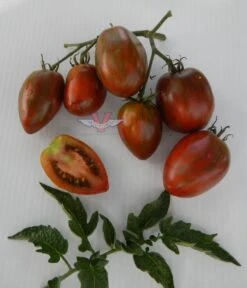
Dwarf Tomato Project
Reviews
There are no reviews yet.